SAR vs optical satellite imagery for vessel detection: what actually changes
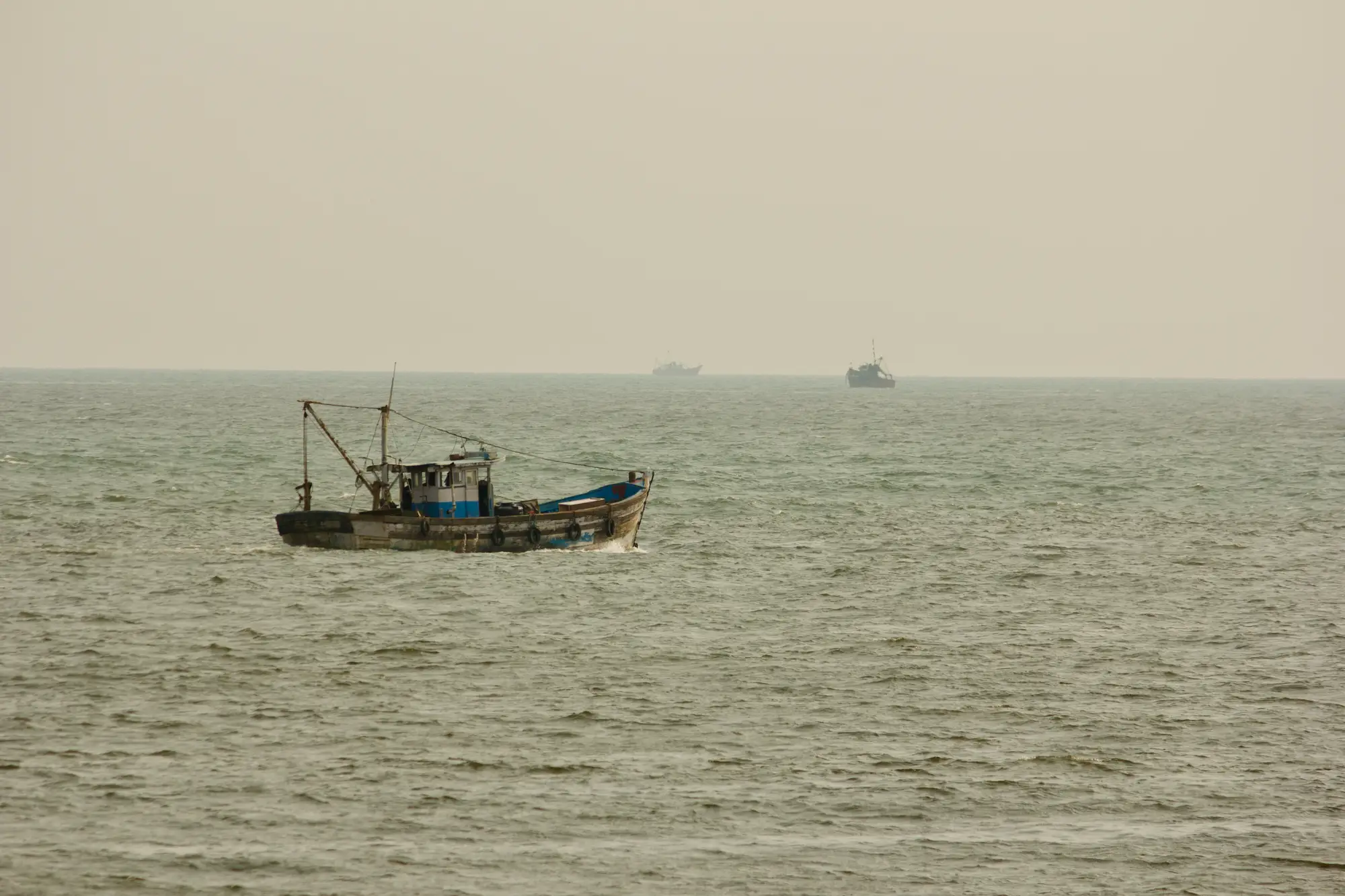
If you've sat through a tasking meeting where someone asks "why didn't we get a pass over that EEZ last Tuesday," you already know the answer usually comes down to one of two sensor families: synthetic aperture radar (SAR) or optical. Both can put a dot on a vessel. They get there in different ways, and that difference decides what lands on your desk and when.
What SAR actually gives you
SAR satellites send down a radar pulse and read the return. Because they generate their own signal, they work at night and they work through cloud. For a watch desk covering a patch of ocean with persistent cloud cover, that's the whole appeal: a SAR tasking doesn't get scrubbed because a weather front sat over the AOI for three days straight. You get a detection, a rough position, and usually a size estimate from the radar cross-section.
What you don't get, in most cases, is a picture you can hand to a boarding team or drop into a brief as evidence a duty officer can read at a glance. SAR returns need trained eyes or a trained model to turn blobs into vessel calls, and distinguishing a small fishing boat from a wave crest or a rig support vessel at the edge of resolution is its own discipline. Revisit rates on SAR constellations also tend to be sparser than optical, so daily coverage of a given reporting area isn't a given unless you're paying for a dedicated tasking cadence.
What optical gives you
Optical imagery is a camera in orbit. RGB, same as what you'd see out the window of a patrol aircraft, just from higher up and on a schedule. At sub-2-meter ground sample distance you can usually tell a longliner from a purse seiner by hull shape and gear layout, which matters when you're trying to figure out which size class of vessel just went dark on AIS. The image itself is also something you can put in front of a magistrate or attach to a boarding brief without translating it first.
The catch is the one everyone already knows: optical needs daylight and it needs a clear sky. Cloud cover is the real dividing line between the two sensor types, not resolution and not revisit rate. A pass over a known hotspot on a cloudy day comes back empty, and there's no retasking your way around weather that hasn't moved on.
Cloud cover is the real dividing line
SAR and optical don't trade off on which one is simply better. They fail in opposite conditions. SAR hands you a detection you still have to classify, through weather that would have grounded an optical pass entirely. Optical hands you a classifiable image, but only on the days the sky cooperates. For an MCS unit running daily watch over a reporting area with mixed weather, the practical answer most operations land on is optical as the daily workhorse for areas with reasonable sky conditions, with SAR held in reserve for the days optical can't deliver, or for persistently overcast zones where it's the only option that shows up at all.
Picking between them for a watch desk
The decision that actually works is matching the sensor to what the desk needs that day: a readable detection with enough resolution to call a size class, or a detection at all regardless of weather. Most MCS operations end up running both, routed by cloud forecast and by what the output needs to support, whether that's a patrol tasking memo or a classification call that has to hold up later.
Where optical pulls ahead for day-to-day enforcement work is the AIS correlation step. A clear optical detection with a size estimate and a timestamp is something you can check against the AIS broadcast log and flag as unmatched in minutes, not hours. That's the gap a daily optical-against-AIS correlation run is built to close: daily passes run against AIS automatically, so the unmatched detections, the vessels on the water but off the record, land on your desk as a ready list instead of a stack of imagery someone still has to trawl through by hand.
If dark-fleet detections are still eating analyst hours every week, it might be worth seeing what a daily unmatched-vessel list looks like on your own AOI.