What is a vessel track history, and why build one before dispatch?
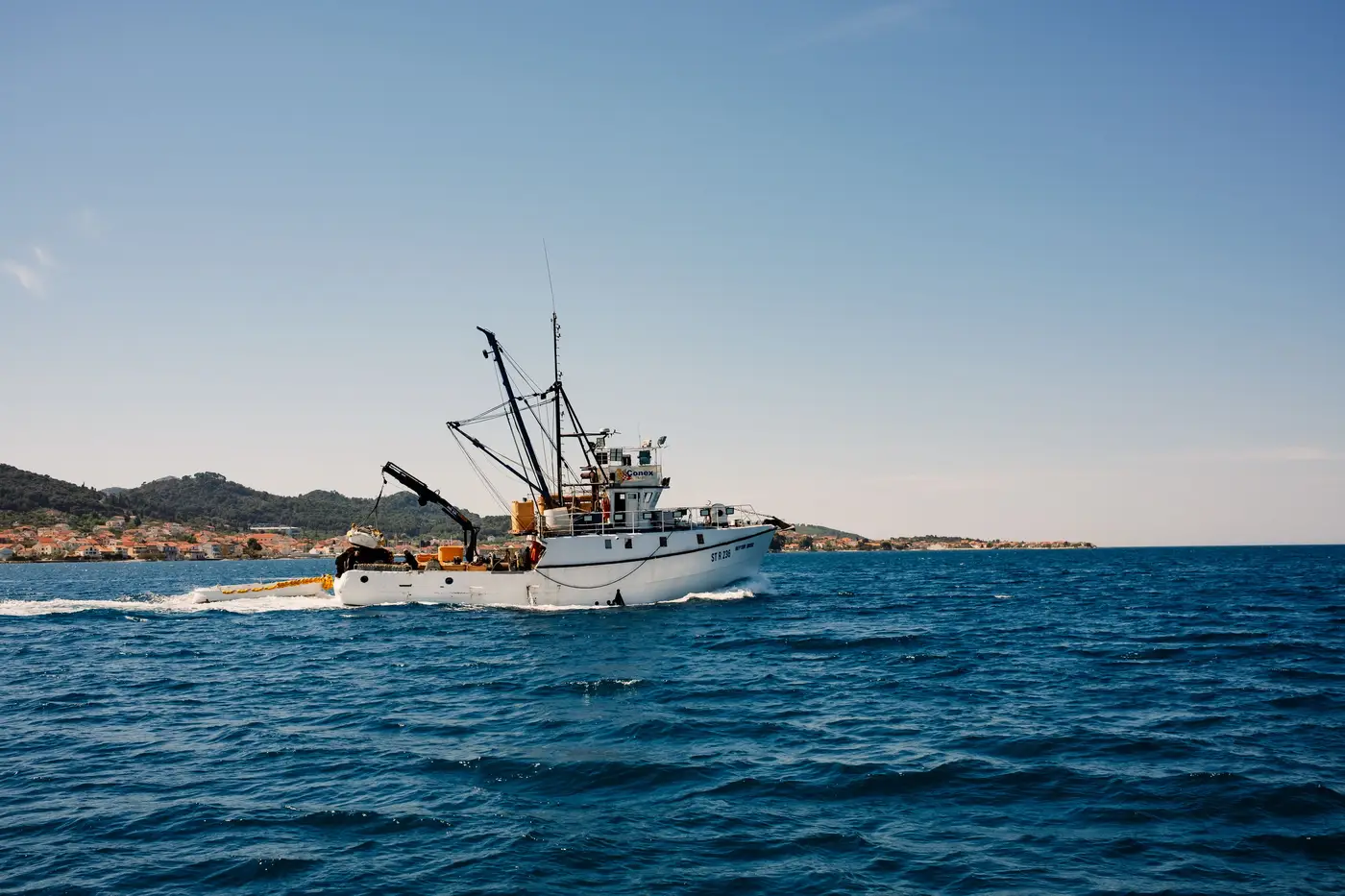
A track history is the sequence of positions, headings and speeds a vessel has reported over time, stitched into a line on the plot. Analysts build one before committing a patrol boat or aircraft because a single detection tells you almost nothing on its own. A track tells you whether a contact has been sitting on a reef edge for six hours, running a trawl pattern, or just passing through a transit lane on its way somewhere else.
Why one sighting isn't enough to act on
When a watch desk gets a single optical hit with no matching AIS broadcast, the instinct is to treat it as a hot lead. Most single gaps turn out to be a fishing vessel that dropped its transponder for an hour, a cargo ship sitting in a known dead zone, or a detection that resolves itself once the AIS message catches up a day later. Dispatching on one unmatched contact burns fuel and crew hours on something that was never dark to begin with.
What changes the calculus is seeing the same size class and behavior show up unmatched more than once in the same patch of water. A repeat unmatched sighting, three nights running near the same reef, the same loitering pattern inside a closed area, is a different kind of signal than a one-off gap. That's the pattern of life a track history is built to surface: something keeps coming back, and doesn't want to be seen doing it.
Building the track from daily passes
The raw material is daily satellite coverage, correlated against the AIS feed for that same window. Each pass either matches a broadcast to an optical detection or it doesn't. Over a week or two, a desk can stack those unmatched hits by position and size class and see whether they cluster, drift along a known fishing ground, or sit static over the same reef at the same hours each night. That stack is the track history, even before anyone has a name or an MMSI attached to it. It's built from absence as much as presence. The AIS silence itself becomes a data point once it repeats.
This matters more in waters where the fleet quietly disables AIS inside an EEZ and switches it back on once clear of the boundary. One unmatched detection near the line could be anything. A cluster of unmatched detections at the same coordinates over consecutive nights, matching a size class consistent with a longliner or a mid-size trawler, starts to look like intent rather than coincidence.
What the track buys you before the boat leaves the dock
None of this replaces a patrol. What it changes is what the patrol asset is chasing. Instead of sending a crew to investigate a single ping that may already be long gone, a desk can brief them on a pattern: last known position, time of night, size class, how many consecutive unmatched passes. That's a tip with some weight behind it, not a coin flip on fuel and hours.
Illegal Fishing Detection runs that optical-to-AIS correlation daily and hands a desk a list of unmatched detections with position, size class and time, so the pattern gets built before anyone has to argue which contact is worth a tasking.
What a track history doesn't give you
A track built from daily optical passes is a starting point for tasking. It gives a desk position, size class and a pattern of repeated absence from the AIS record, short of a vessel name, flag state, or confirmed intent. What it does is sort the noise, so a desk working a long coastline on limited patrol hours isn't treating every gap as equally urgent, and the gaps that keep repeating get looked at before the trail goes cold.
That sorting is most of the job on a busy watch floor. A track history is what turns "we had a sighting" into "we had the same thing, three nights, same reef," which is the sentence that actually gets a boat sent out.
If your desk is still building that picture by hand from AIS exports, it's worth seeing what a daily unmatched-detections list looks like on your own patch of water.