Why RGB satellite imagery can't catch a dark fleet fishing at night
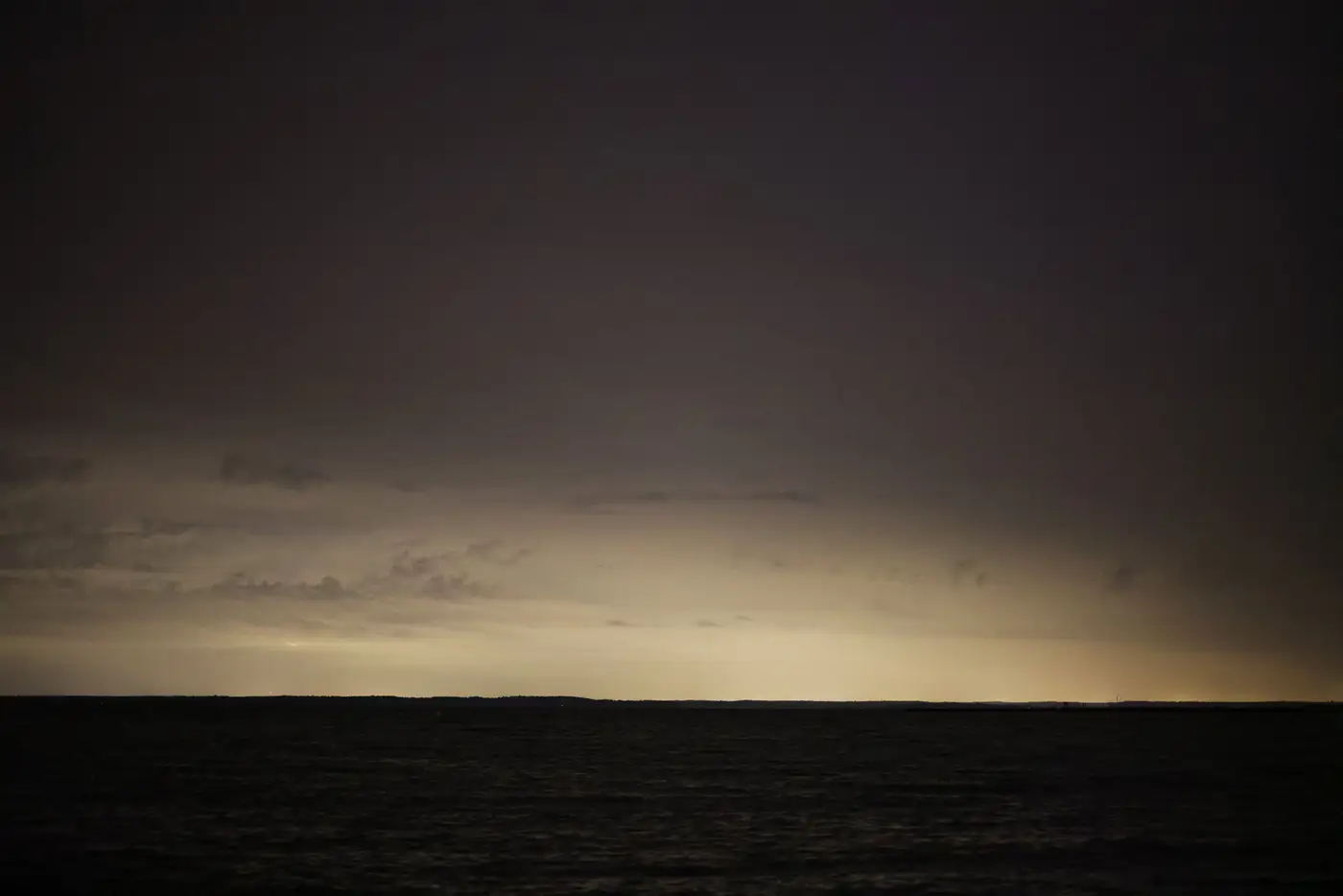
A watch desk officer handed a new high-res satellite feed usually asks one question first: does it see dark vessels at night? With an RGB optical sensor, it doesn't. The sensor needs sunlight bouncing off the water to produce an image, and after dusk there's no sunlight to bounce.
Optical imagery runs on reflected light, not radar
RGB sensors capture three visible light bands, the same ones your eye uses. That's why the imagery looks like a photograph instead of the grainy grayscale you get from radar. A photograph needs a light source, though, and the satellite isn't carrying one. It's recording sunlight bouncing off the sea surface and off a vessel's hull and superstructure. Cut the sun, and the sensor has nothing to record.
Most high-res optical satellites fly sun-synchronous orbits timed to cross a given stretch of ocean at roughly the same local hour each day, often mid-morning. One overpass, one short window, then nothing until the next day's pass. SAR (synthetic aperture radar) sidesteps this by transmitting its own pulse and reading the return, which is how it manages all-weather, day-or-night coverage. RGB optical doesn't have that option. It's a daytime instrument, full stop; more tasking or a sharper sensor doesn't change when the sun is up.
The dark fleet doesn't wait for your overpass time
Going dark isn't random. A vessel that wants to avoid an AIS record while actively fishing has every incentive to time the blackout around whatever overhead coverage it expects. Transponders get switched off before entering a closed area, before a transshipment, before working gear inside someone else's EEZ, then switched back on once the vessel is clear. If the only eyes in the sky are optical and the vessel's blackout window includes the hours the satellite isn't overhead at all, that activity simply doesn't get photographed. No amount of tasking more optical satellites fixes a physics problem; you can widen the daylight window you're already working with, but the satellite won't produce an image at 0200.
An RGB system can't catch a vessel that fishes exclusively at night and surfaces again before sunrise. If that's the specific threat profile for a given fishery, the gap calls for a radar tasking or a different sensor mix, not a daily optical pass run harder.
Where a daily optical pass still earns its place on the desk
Plenty of dark fleet behavior happens in broad daylight too. A vessel loitering on a known fishing ground with AIS off, a transshipment meet running mid-morning, a hull sitting inside a marine protected area at noon with no transponder broadcast, these show up fine in a daylight image. On most working days the analyst's task is matching the hulls photographed that morning against the AIS track, and that match works the same whether the blackout started at midnight or ten minutes before the overpass.
Illegal Fishing Detection runs on exactly that daytime window: a daily high-res optical pass correlated against AIS broadcasts, producing a list of unmatched detections with position, size class and time for whatever got photographed that morning. It's a starting point for the watch desk before a patrol asset gets dispatched, covering the daylight gap where the optical image and the AIS record disagree.
If your fishery's dark activity skews toward daylight hours rather than a strictly nocturnal pattern, an unmatched-detections list from a daily optical pass is worth a look.